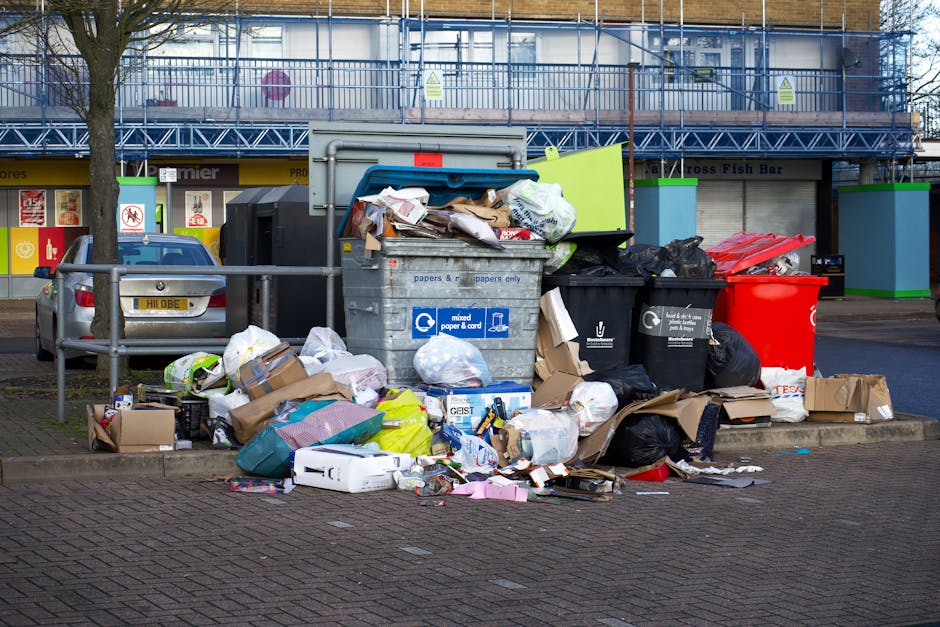
Bulky waste rules Harrow and disposal for removal firms
If you are arranging a house move, clearing an office, or helping a customer shift a pile of awkward old furniture, bulky waste rules in Harrow can quickly become the part nobody wants to get wrong. One minute it is a sofa, a mattress, a chest of drawers, maybe a filing cabinet with a stubborn jammed drawer; the next, it is a compliance issue, a timing issue, and possibly a very unhappy customer. For removal firms, getting bulky waste disposal right is not just tidy practice. It protects reputation, keeps jobs moving smoothly, and reduces the risk of a bad day becoming an expensive one.
This guide explains how bulky waste disposal usually works for removal firms in Harrow, what to check before moving items, where the common traps are, and how to build a cleaner, safer process. If you also want to understand the wider moving and waste-handling side of your operations, it can help to review the team's health and safety approach, the company's recycling and sustainability commitments, and the practical details in the terms and conditions. Small things, yes. But they matter.
Expert summary: the safest way to handle bulky waste in Harrow is to identify the item correctly, separate reusable from disposable goods, confirm who is responsible for removal, keep a clear chain of handling, and send waste only to appropriate facilities through lawful routes. That sounds simple. In practice, it needs a system.
Table of Contents
- Why bulky waste rules in Harrow matter
- How bulky waste disposal works for removal firms
- Key benefits and practical advantages
- Who this is for and when it makes sense
- Step-by-step guidance
- Expert tips for better results
- Common mistakes to avoid
- Tools, resources and recommendations
- Law, compliance, standards, or best practice
- Options, methods, or comparison table
- Case study or real-world example
- Practical checklist
- Conclusion
- Frequently asked questions
Why Bulky waste rules Harrow and disposal for removal firms Matters
Bulky waste is not just "big rubbish". It usually means items too large for ordinary household bins and too awkward for a quick lift into a standard collection system. Think wardrobes, sofas, beds, broken desks, white goods, office chairs, garden furniture, and the odd flattened box spring that seems to catch on every doorway in the building. For removal firms, the challenge is that these items sit at the intersection of transport, handling, customer expectations, and waste responsibility.
In Harrow, as elsewhere in London, you can't assume that because an item is hard to move it can be handled casually. The person controlling the waste arrangement should be clear about what is being removed, who owns it, whether it will be reused, and where it ends up. If that sounds fussy, fair enough. But the difference between a smooth job and a complaint often comes down to those few details.
Removal firms also need to think about mixed-load jobs. A customer might book a move, then ask the team to take an old wardrobe "if there's space". That's normal. But once waste enters the picture, the process changes. You need a disposal route, not just a moving route. That is where a professional removal company or removal services provider should already have a routine in place.
There is also a trust angle. Customers notice when a team handles bulky waste neatly: items are separated, stairwells are protected, lifting is careful, and no one is shrugging at the mess. They notice even more when a team doesn't. A pile left on the pavement, or a vague promise that "someone will sort it later", can undo a lot of confidence very quickly.
Practical takeaway: good bulky waste handling is part legal hygiene, part customer care, and part operational discipline. Treat it like an essential step, not an afterthought.
How Bulky waste rules Harrow and disposal for removal firms Works
The process usually starts before the van is even loaded. A removal firm should identify whether each item is being:
- moved to a new property or office
- reused or donated
- stored temporarily
- treated as waste for disposal
That distinction sounds obvious, but in real jobs it gets blurred. A customer may change their mind on the day. A landlord may want abandoned items removed. An office move may reveal that half the filing cabinets are not worth relocating. Once an item becomes waste, the removal team should handle it as such and avoid mixing it up with ordinary transport.
A responsible disposal workflow normally includes a few practical checks:
- Confirm the item type. Upholstered furniture, wood, metal, electrical items, and mixed-material goods may require different treatment.
- Separate reusable from non-reusable goods. A useable table may be better for a furniture pick up route than a disposal route.
- Check access and loading risks. Narrow stairs, broken lifts, wet pavements, and awkward corners all affect safe handling.
- Decide the route. Reuse, donation, recycling, transfer, or disposal should be chosen deliberately.
- Document what happens. Even a simple job note helps if a customer later asks where something went.
For removal firms working in Harrow, the paperwork does not need to be dramatic, but it should be real. A basic job record, item list, and disposal note can save a lot of back-and-forth later. Truth be told, customers do not usually ask for all this detail until something goes wrong. Then they ask for all of it at once.
Where vehicles are involved, the chosen load matters too. A smaller job might suit a man and van approach, while heavier or bulkier disposal work may require more capacity and better loading control with a moving van or similar setup. The right vehicle is not about sounding impressive. It is about getting the load there safely and in one piece.
Key Benefits and Practical Advantages
When a removal firm handles bulky waste properly, the benefits are more than compliance. You will usually see gains in speed, customer satisfaction, and job quality. It also reduces the little dramas that eat up a day.
- Cleaner job flow: teams know what stays, what goes, and what needs special handling.
- Lower risk of damage: fewer rushed lifts, fewer crushed corners, fewer scratched floors.
- Better customer trust: clients like simple explanations and clear outcomes.
- Less waste confusion: no mixing of reusable items with material that must be disposed of.
- Improved space planning: vehicles, labour, and loading order can be sized properly.
- Stronger reputation: professional disposal habits make a removal firm look organised and reliable.
There is also a financial benefit, though it should be handled carefully. Poorly planned bulky waste work can create extra return trips, wasted labour, and frustrated customers asking for discounts. That is not the kind of margin anyone wants.
If your operation includes broader move support, this is where services such as house removals, home moves, or office removals can be made easier by folding bulky waste decisions into the planning stage. One plan. Fewer surprises.
Who This Is For and When It Makes Sense
This topic matters to more people than you might think. It is not only for waste contractors. It matters to removal firms, landlords, office managers, property agents, and customers who are trying to clear out a space without creating a mess for someone else.
It makes particular sense in these situations:
- House moves: old sofas, broken beds, children's furniture, and garden items often need sorting on the day.
- Office relocations: desks, cabinets, partitions, and surplus chairs can become waste very quickly.
- End-of-tenancy clears: abandoned bulky items are a common headache.
- Downsizing moves: clients may keep the best items and let the rest go.
- Mixed-service jobs: the team is moving some items and disposing of others.
For firms that already offer broader moving support, these jobs are often bundled with packing help, loading labour, or transport-only support. A packing and unpacking services team, for example, may also encounter bulky waste decisions simply because they are the first people to see what is staying and what is not.
And yes, sometimes the need is obvious only at the last minute. A customer opens the garage and there it is: a treadmill from 2011, a cracked wardrobe, two office monitors, and a chair that squeaks like a tiny mouse with a grudge. That is exactly when a practical disposal process earns its keep.
Step-by-Step Guidance
A clear process is the easiest way to keep bulky waste handling under control. Here is a straightforward working method that removal firms can adapt.
1. Assess the item before the job
Start by identifying what the item is, how heavy it is, and whether it contains any hazardous or electrical components. Not every awkward item is just an awkward item. Some need special attention because of batteries, glass, sharp edges, or contamination.
2. Separate move items from waste items
Keep the "going with us" pile apart from the "not going with us" pile. It sounds almost too simple, but this one habit prevents confusion. Use labels, room-by-room grouping, or a quick written list. Anything that gives the team a shared picture will help.
3. Decide whether reuse is possible
If a piece is still fit for use, disposal may not be the best route. Furniture, shelving, and other reusable items can sometimes be moved separately rather than treated as waste. A dedicated furniture pick up approach may suit that better than a one-size-fits-all disposal plan.
4. Plan the loading order
Bulky waste should not be thrown into the vehicle at random. Heavy items should be loaded with stability in mind. Fragile or awkward items should be protected. A tidy load is safer, easier to unload, and less likely to cause damage inside the van.
5. Protect the property during removal
Door frames, banisters, hallways, and lifts often get overlooked in the rush. Use floor protection and take the time to pivot large items properly. You only need to bang a corner into a wall once to remember why this matters.
6. Use the correct disposal route
Not every item should be handled the same way. Some items may be recycled, some reused, and some sent for disposal. The route should match the item, the load, and the job promise you gave the customer.
7. Record the outcome
Keep a basic note of what was removed and how it was handled. The record does not need to be long. It just needs to be clear enough to answer a customer query later without guesswork.
Expert Tips for Better Results
After enough jobs, the patterns become obvious. The firms that do bulky waste well do a few boring-looking things consistently. Boring, perhaps. Effective, absolutely.
- Quote on the whole job, not just the easy part. A move estimate that ignores bulky waste usually falls apart on the day.
- Ask about storage rooms, lofts, and sheds. These are the places where extra items hide.
- Build a simple "keep, move, dispose" check. Even a one-minute review with the customer can prevent misunderstandings.
- Train crews to say no politely when needed. If something is unsafe to move, say so early and clearly.
- Use the right-size vehicle. A cramped load invites damage and wasted time.
- Make sustainability visible. Customers often appreciate hearing that usable items are being separated rather than simply tipped.
One little habit we have seen work well is a quick photo record of non-sensitive bulky waste items before loading. It is not about being dramatic. It is simply a clean way to avoid "I thought that chair was being kept" conversations later. No fuss, no blame game.
If you regularly handle mixed loads, it is worth aligning bulky waste routines with the rest of your fleet and operations. That might include using a dedicated removal van for lighter mixed jobs or a larger removal truck hire arrangement when the disposal volume is significant. Better planning, fewer awkward reshuffles in the driveway.
Common Mistakes to Avoid
Most problems with bulky waste are not caused by bad intent. They come from rushing, assuming, or leaving the details until the back door is open and the clock is ticking.
- Assuming all large items can be treated the same. A mattress, a filing cabinet, and a broken chair are not identical just because they are awkward.
- Mixing move items with waste items. This creates confusion and can lead to accidental disposal of the wrong thing.
- Forgetting access issues. Tight stairwells and narrow entries can turn a simple lift into a slow one.
- Not checking whether items can be reused. Good items should not be thrown away just because disposal is quicker.
- Underestimating labour. Bulky waste is often physically more demanding than a standard box move.
- Leaving responsibility vague. If the customer, landlord, or agent has asked for disposal, that should be clearly documented.
Another common one: the "we'll just wing it" approach. That phrase has ruined more tidy plans than people care to admit. In removal work, winging it is rarely charming. It is usually expensive.
Tools, Resources and Recommendations
Removal firms do not need fancy systems to improve bulky waste handling. Simple tools often do the job better anyway.
- Job sheets: Useful for item lists, access notes, and disposal instructions.
- Photo records: Handy for confirming item condition and quantity.
- Labels or tape: Helps mark keepers, movers, and waste.
- Basic load plans: A quick note of what goes in first and what needs protection.
- Customer confirmation messages: Good for agreeing what will be removed before arrival.
For firms handling a lot of residential work, it can also help to compare bulky waste procedures with standard moving services and vehicle use. For example, pairing disposal jobs with man with van work may suit smaller clearances, while larger household jobs may be closer to house movers or full removals operations. Matching the service to the job keeps expectations sane.
And if a client is comparing providers, they may also look at the business side: pricing and quotes, insurance and safety, and the company's general standards. A well-run firm tends to look well-run from the first email onward. That part is not magic. It is just process.
Law, Compliance, Standards, or Best Practice
For any firm dealing with waste in the UK, the safest mindset is to follow current legal duties, local authority expectations, and recognised waste-handling best practice. Harrow-specific arrangements can vary, and council rules may change, so removal firms should not rely on memory or hearsay. Check the latest local requirements before operating a disposal workflow.
At a practical level, the core compliance themes are usually familiar:
- Duty of care: waste should be handled responsibly from collection to final transfer.
- Correct classification: know whether an item is reusable, recyclable, electrical, or general bulky waste.
- Safe transport: loads should be secure and vehicles suitable for the task.
- Accurate records: keep enough information to show what was taken and how it was handled.
- Safe working methods: protect staff, customers, and property during lifting and loading.
Best practice also includes being transparent about what your firm can and cannot take. If an item is hazardous, contaminated, or unusually difficult to move, say so early. Customers usually accept firm boundaries if they are explained clearly and politely.
For companies with broader service lines, compliance should run across the whole business, not only the waste side. That includes corporate information, complaints handling, and payment safety. It may sound administrative, but these things support trust. A customer looking at a firm offering about us, complaints procedure, and payment and security pages tends to feel more confident before they even book.
Options, Methods, or Comparison Table
There is more than one sensible way to handle bulky waste in Harrow. The best choice depends on the item, urgency, labour involved, and whether the goods can be reused.
| Method | Best for | Advantages | Watch-outs |
|---|---|---|---|
| Reuse / furniture pick up | Clean, usable furniture and household items | Reduces waste, may be simpler for customers, supports sustainability | Needs careful condition checks and honest judgement |
| Mixed removal job | Moves with a few unwanted bulky items | Efficient for customers, one crew can manage both tasks | Requires clear item separation and good loading discipline |
| Dedicated clearance-style collection | Large volumes of unwanted goods | Better for heavy or cluttered clearances, easier to plan space | May need more labour and vehicle capacity |
| Specialist transport for bulky loads | Oversized or awkward furniture-heavy jobs | Improves safety and handling control | Needs good access planning and secure loading |
If you are unsure which method is right, a quick operational check is usually enough. Ask: is it reusable, is it moveable, is it safe, and is it worth separating? Those four questions solve a surprising number of problems.
Case Study or Real-World Example
A typical Harrow job might look something like this. A family is moving from a terraced house and wants most belongings taken to the new property, but the old double wardrobe, two office chairs, and a damaged bookcase need to go. The loft also contains a broken suitcase and an old fan. Nothing outrageous. Just the kind of half-clear, half-move job that feels easy until the van is packed.
The removal team walks through the property first and marks the items to stay, move, or dispose. The family confirms that the wardrobe is too worn for reuse, but the bookcase might be useful to someone else if it is still solid. The team sets aside the reusable item, loads the move items separately, and documents the waste items before departure. The result is tidy, quick, and far less stressful than a "we'll sort it later" approach.
What made the difference? Clear decisions, a few minutes of communication, and no guessing. Simple, really. But in removal work, simple is often the best kind of professional.
On the commercial side, the same logic applies to an office move. A company might be relocating with new desks already purchased, leaving old cabinets and surplus chairs to clear. In that case, the work may sit alongside office relocation services or office removals, with bulky waste separated from the furniture that is being kept. That separation keeps the move quicker and the office team calmer on Monday morning.
Practical Checklist
Use this checklist before any bulky waste collection or mixed removal job.
- Confirm which items are being moved and which are being disposed of.
- Check whether any bulky items are reusable or suitable for a furniture pick up route.
- Identify access issues such as stairs, lifts, tight corners, or parking limits.
- Decide whether the job needs one vehicle or a larger load capacity.
- Protect floors, walls, and door frames before lifting starts.
- Keep waste items separate from keep items from the beginning.
- Record the job notes clearly, even if the disposal list is short.
- Make sure the team knows who the decision-maker is on site.
- Choose the correct disposal or transfer route for the item type.
- Review safety checks before the vehicle leaves.
If you can tick those boxes, you are already ahead of a lot of rushed jobs. Not glamorous. Very effective.
Conclusion
Bulky waste rules in Harrow and disposal for removal firms are really about disciplined, practical handling. The best firms do not wait for confusion to appear on the pavement. They build waste decisions into the move plan, separate reusable items from true disposal loads, and keep the process clear for the customer from start to finish.
That approach saves time, protects property, and makes the whole service feel calmer. And honestly, calmer wins. Customers remember the team that arrived prepared, spoke clearly, and left the place better than they found it. That is what good removal work should feel like.
Get a free quote today and see how much you can save.
If you are still refining your process, start with the simplest move: define the item, define the route, and document the handoff. Everything else gets easier from there. One clear system, then another, and soon the messy jobs are not so messy after all.
Frequently Asked Questions
What counts as bulky waste for removal firms in Harrow?
Bulky waste usually means items too large or awkward for normal household bins, such as sofas, wardrobes, mattresses, desks, and large chairs. For removal firms, the exact handling depends on whether the item is being reused, moved, or disposed of.
Can a removal company take both moving items and bulky waste in the same job?
Yes, many do. The important part is separating the items clearly and agreeing in advance what is going to the new property and what is being removed as waste. Mixed jobs are common, but they need a clean process.
Do reusable items have to be treated like waste?
No, if an item is still suitable for use it may be better handled as a reuse or furniture pick up item rather than waste. That decision should be made honestly and early, not halfway down the stairs.
What should a removal firm check before loading bulky waste?
It should check item type, weight, access, possible hazards, and whether the item can be reused or recycled. A short on-site assessment saves a lot of trouble later.
Is bulky waste disposal different from a standard house move?
Yes. A house move is about transport of belongings, while bulky waste disposal adds responsibility for lawful handling, separation, and an appropriate disposal route. The two jobs can overlap, but they are not the same thing.
How do removal firms reduce damage during bulky waste collection?
They reduce damage by protecting floors and walls, using the right number of staff, planning the lift path, and securing items properly in the vehicle. A calm, ordered lift is usually the best one.
Should removal firms keep records of bulky waste jobs?
Yes, even basic records are helpful. Notes on what was taken, how it was handled, and who approved it can prevent disputes and make the process more professional.
What if a customer changes their mind on the day?
That happens. The team should pause, confirm the change clearly, and update the job list before loading continues. A quick conversation is better than a surprise disposal mistake.
Can bulky waste be included in office removals?
Absolutely. Office clearances often produce surplus furniture, storage units, or damaged equipment. The trick is to separate what is being relocated from what is being cleared out, especially in bigger moves.
What is the safest way to choose between disposal and reuse?
Ask whether the item is clean, structurally sound, and realistically useful to someone else. If yes, reuse or furniture pick up may be the better option. If not, disposal is usually the practical route.
Do small removal jobs still need a bulky waste plan?
Yes, even small jobs benefit from a plan. One awkward sofa can slow down a whole schedule if nobody has checked the access, the route, or the disposal decision beforehand.
Where can customers learn more about a firm's standards and policies?
They can review pages such as the company's about information, health and safety policy, recycling and sustainability approach, and insurance and safety details. Those pages help customers judge whether the business is organised and trustworthy.